
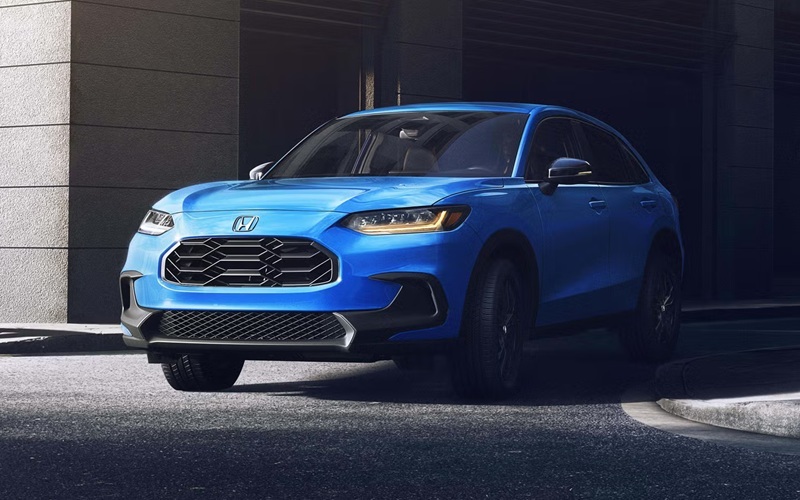
2026 Honda HR-V SUV: How Does the Drive Train Work?
The drivetrain is the system responsible for transferring power from a vehicle’s engine to its wheels. It includes several mechanical and electronic components that work together to ensure efficient power delivery, stable handling, and reliable traction. In compact sport utility vehicles like the Honda HR-V, the drivetrain balances everyday drivability with efficiency and stability in a wide variety of road conditions.
Modern drivetrains combine traditional mechanical components—such as transmissions, driveshafts, and differentials—with electronic systems that continuously monitor vehicle behaviour. Sensors measure wheel speed, steering input, and throttle position, allowing the drivetrain to adjust torque distribution and maintain stability.
The drivetrain in the Honda HR-V reflects this combination of mechanical engineering and electronic control. By integrating the engine, transmission, and traction management systems, the drivetrain delivers smooth acceleration, efficient cruising, and reliable performance on different road surfaces.
The HR-V Drivetrain Architecture
The drivetrain architecture of the Honda HR-V consists of several interconnected systems responsible for converting engine power into motion.
Major drivetrain components include:
The internal combustion engine
A continuously variable transmission (CVT)
A front differential
Driveshafts and axles
An optional all-wheel-drive system
Electronic traction management systems
These components work together to transfer torque from the engine to the wheels while maintaining efficiency and stability.
In most compact SUVs, the drivetrain is designed primarily for front-wheel drive, with the option of engaging additional traction through an all-wheel-drive configuration. The HR-V follows this approach, allowing it to maintain efficient everyday driving while improving traction when required.
Engine Power Generation
Internal Combustion Process
The drivetrain begins with the engine, which converts chemical energy from fuel into mechanical energy through combustion.
Inside the engine, fuel and air are mixed and ignited within the cylinders. This combustion creates expanding gases that push the pistons downward. The pistons rotate the crankshaft, generating torque.
Torque is the rotational force that ultimately moves the vehicle.
Engine Output Characteristics
In compact SUVs such as the HR-V, engines are typically designed to provide a balance between fuel efficiency and adequate torque for everyday driving.
Important characteristics of the engine include:
Smooth power delivery
Efficient fuel consumption
Moderate torque output suitable for city and highway driving
Once torque is generated at the crankshaft, it must pass through the transmission before reaching the wheels.
Continuously Variable Transmission (CVT)
Transmission Function
The transmission adjusts the relationship between engine speed and wheel speed. This allows the engine to operate efficiently while providing the appropriate torque for acceleration or cruising.
The Honda HR-V uses a continuously variable transmission rather than a traditional multi-gear automatic transmission.
CVT Operating Principle
A CVT uses two variable-diameter pulleys connected by a high-strength belt or chain.
The system operates by adjusting the diameter of these pulleys:
When the drive pulley becomes larger and the driven pulley smaller, the ratio increases for higher vehicle speed.
When the drive pulley becomes smaller and the driven pulley larger, the ratio decreases, providing more torque for acceleration.
Because the pulleys can adjust continuously, the transmission can produce an infinite number of gear ratios within its operating range.
Efficiency Advantages
The CVT allows the engine to remain within an optimal speed range where it operates most efficiently.
Benefits include:
Smooth acceleration without noticeable gear shifts
Improved fuel efficiency
Reduced mechanical complexity compared with some traditional transmissions
Front-Wheel Drive System
Primary Power Delivery
In its basic configuration, the HR-V uses a front-wheel-drive drivetrain layout. In this design, the engine and transmission are at the front of the vehicle and power is delivered to the front wheels.
Front-wheel drive offers several advantages:
Reduced drivetrain weight
Efficient packaging within a compact vehicle structure
Improved traction during acceleration because vehicle weight shifts toward the front wheels
The transmission sends torque to the front differential, which distributes power to the left and right front wheels.
Front Differential Operation
The differential is a mechanical device that allows the wheels on the same axle to rotate at different speeds.
This function is necessary during cornering. When a vehicle turns, the outer wheel travels a greater distance than the inner wheel. The differential allows each wheel to rotate at the appropriate speed.
Without a differential, the wheels would be forced to rotate together, which could lead to tire wear and reduced handling stability.
All-Wheel-Drive System
Purpose of All-Wheel Drive
Some versions of the HR-V include an all-wheel-drive system designed to improve traction on slippery surfaces such as snow, ice, or loose gravel.
Unlike permanent four-wheel-drive systems used in some off-road vehicles, the HR-V system primarily operates as front-wheel drive. When additional traction is required, power can be directed to the rear wheels.
Rear Driveshaft and Differential
When the all-wheel-drive system engages, torque is transferred through a driveshaft from the transmission to the rear differential.
The rear differential distributes torque to the rear wheels in the same way the front differential distributes torque to the front wheels.
This additional traction can improve stability when driving on uneven or low-friction surfaces.
Electronic Traction Management
Wheel Speed Sensors
Modern drivetrain systems rely heavily on electronic monitoring systems. Wheel speed sensors measure the rotational speed of each wheel and send this data to the vehicle’s control modules.
If one wheel begins to spin faster than the others due to loss of traction, the system detects the difference.
Traction Control System
When wheel slip is detected, the traction control system can respond in several ways:
Reducing engine power
Applying braking force to a spinning wheel
Redirecting torque to wheels with better traction
These adjustments occur automatically and help maintain vehicle stability.
Vehicle Stability and Drivetrain Coordination
Stability Control Integration
The drivetrain works closely with electronic stability control systems that monitor vehicle motion.
Sensors track variables such as:
Steering angle
Lateral acceleration
Yaw rate
If the vehicle begins to lose directional stability, the control system can adjust torque delivery or apply braking to specific wheels.
Cooperative System Operation
Because the drivetrain, traction control system, and stability control system share data, they can respond quickly to changing driving conditions.
This integration helps maintain safe and predictable handling characteristics.
Technicians explaining the HR-V drivetrain sometimes emphasize the cooperation between mechanical and electronic systems when reviewing the vehicle's technology at T&T Honda.
Driveshafts and Axles
Torque Transmission
Driveshafts and axles carry torque from the differential to the wheels.
Axles must be strong enough to handle rotational force while also allowing for suspension movement and steering input.
Constant Velocity Joints
Most modern front-wheel-drive vehicles use constant velocity (CV) joints in their axle assemblies.
These joints allow the axle to transmit power smoothly, even when the wheels are turning or the suspension is moving.
CV joints help maintain consistent torque transfer while minimizing vibration.
Thermal Management and Durability
Transmission Cooling
Drivetrain components generate heat during operation, especially when the vehicle is accelerating or carrying additional load.
Cooling systems help maintain proper operating temperatures within the transmission.
Transmission fluid circulates through cooling passages and heat exchangers to dissipate heat.
Component Durability
Drivetrain components are engineered to withstand repeated mechanical stress. Materials such as hardened steel gears and reinforced housings provide durability under long-term use.
Proper lubrication and thermal management ensure that these components continue to function efficiently.
Power Flow Summary
The drivetrain operates as a coordinated sequence of systems that transfer power through the vehicle.
The power flow follows this general path:
The engine produces torque through combustion.
The transmission adjusts gear ratios to control power delivery.
The differential distributes torque between wheels on the same axle.
In all-wheel-drive versions, torque can also travel through a driveshaft to the rear axle.
Electronic control systems monitor traction and adjust torque distribution as needed.
This coordinated system allows the HR-V to deliver smooth acceleration, efficient cruising, and stable handling across a variety of road conditions.
2026 Honda HR-V FAQ
What is the drivetrain in the 2026 Honda HR-V?
The drivetrain is the system that transfers power from the engine to the wheels. It includes the transmission, differentials, driveshafts, axles, and electronic traction control systems.
What type of transmission does the HR-V use?
The vehicle uses a continuously variable transmission that adjusts gear ratios smoothly through variable pulleys and a belt system.
Does the HR-V offer all-wheel drive?
Yes. Some configurations include an all-wheel-drive system that can direct power to the rear wheels when additional traction is needed.
What is the purpose of a differential?
A differential allows wheels on the same axle to rotate at different speeds, which is necessary when the vehicle turns.
How does the drivetrain help maintain traction?
Sensors monitor wheel speed and road conditions. If wheel slip occurs, the traction control system can adjust engine power or apply braking force to maintain stability.
*Disclaimer: Content contained in this post is for informational purposes only and may include features and options from US or internacional models. Please contact the dealership for more information or to confirm vehicle, feature availability.*


