
Does the 2026 Honda Civic Offer Good Fuel Efficiency?
The Honda Civic continues as a compact sedan with gasoline and hybrid powertrain options. Fuel efficiency remains a key characteristic of this model line. Engine size, transmission design, hybrid technology, vehicle weight, and aerodynamic structure all contribute to overall fuel consumption.
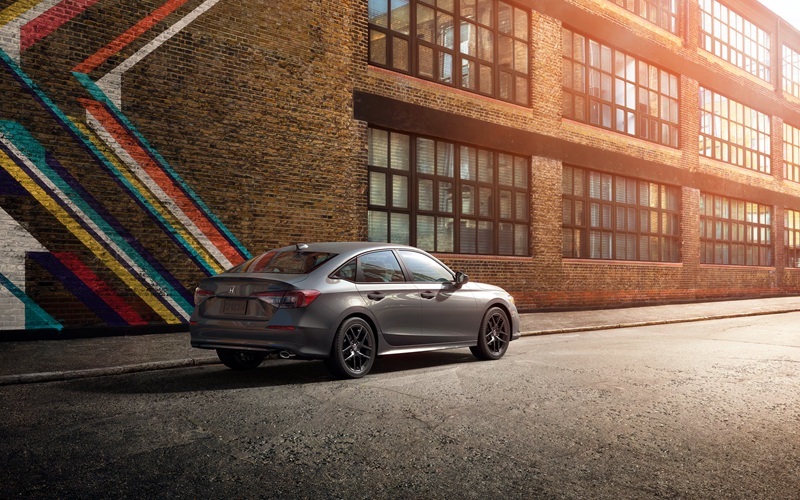
Gasoline Engine Specifications
The standard gasoline version uses a 2.0-litre four-cylinder engine paired with a continuously variable transmission (CVT). This engine operates with electronic fuel injection and variable valve timing.
Key characteristics include:
2.0-litre displacement
Four cylinders
Naturally aspirated design
CVT automatic transmission
Front-wheel drive layout
The combined fuel consumption for this configuration is typically approximately 7.0 to 7.4 L/100 km, depending on trim and driving conditions.
The CVT helps maintain efficient engine speeds by adjusting gear ratios seamlessly rather than shifting between fixed gears.
Hybrid Powertrain Configuration
Hybrid variants are available in the Civic lineup. The hybrid system combines a gasoline engine with electric motors to reduce fuel consumption.
Hybrid System Components
The system includes:
2.0-litre four-cylinder gasoline engine
Two electric motors
Lithium-ion battery pack
Electronic continuously variable transmission (e-CVT)
The hybrid system allows the vehicle to operate on electric power alone at low speeds under certain conditions.
Hybrid Fuel Consumption
Combined fuel consumption for hybrid models is typically 4.8-5.0 L/100 km.
Electric motor assistance reduces gasoline engine load during acceleration and city driving. Regenerative braking captures energy during deceleration and stores it in the battery.
Transmission Design and Efficiency
Transmission design directly affects fuel use.
Continuously Variable Transmission
The gasoline Civic uses a CVT rather than a traditional automatic transmission. This design:
Maintains optimal engine speed
Reduces fuel waste during acceleration
Eliminates fixed gear steps
By keeping engine revolutions in an efficient range, the CVT supports stable fuel consumption.
Electronic CVT in Hybrid Models
Hybrid models use an electronic CVT integrated with electric motors. This configuration:
Balances engine and motor power
Adjusts torque distribution automatically
Enhances smooth acceleration
The system transitions between electric and gasoline power without driver input.
Drive Modes and Energy Management
The Civic includes selectable drive modes that influence throttle response and energy use.
ECON Mode
ECON mode modifies:
Throttle sensitivity
Climate control output
Transmission response
These changes reduce fuel use by prioritizing efficiency over acceleration response.
Hybrid models may also display power-flow information on the instrument cluster, allowing drivers to monitor energy use.
Aerodynamic Structure
Vehicle shape affects fuel consumption, particularly at highway speeds.
The Civic sedan features:
Low front profile
Smooth roofline
Integrated rear deck design
Underbody panels that reduce airflow disruption
These design elements help reduce aerodynamic drag. Lower drag improves highway fuel efficiency.
Compact exterior dimensions also limit the vehicle's overall mass and frontal area.
Weight and Platform Construction
The Civic uses a unibody structure with high-strength steel in critical areas. This construction method supports structural rigidity while controlling weight.
Lower vehicle weight contributes to:
Reduced fuel demand during acceleration
Efficient braking performance
Stable handling
Hybrid versions add battery components, which increase overall mass. However, the electric motor's torque compensates for the gasoline engine's workload.
Urban and Highway Efficiency Differences
Fuel consumption varies based on driving conditions.
City Driving
In urban traffic, the hybrid system provides:
Electric-only operation at low speeds
Reduced idle fuel use
Regenerative braking energy recovery
This results in lower city fuel consumption than the gasoline model.
Highway Driving
At steady highway speeds, aerodynamic design and engine efficiency determine fuel use.
Gasoline models maintain consistent performance at highway speeds, while hybrid versions continue to benefit from optimized engine operation.
Technology That Supports Efficiency
Several features help maintain efficient operation.
Auto Idle Stop
The gasoline Civic includes an idle stop system. This feature turns off the engine when the vehicle is stationary and restarts it when the brake pedal is released.
Idle stop reduces fuel consumption in stop-and-go traffic.
Driver Information Display
The instrument cluster provides:
Real-time fuel economy data
Average fuel consumption figures
Hybrid system energy flow information
These displays allow drivers to monitor efficiency.
Fuel Tank Capacity and Driving Range
The gasoline Civic has a fuel tank capacity of approximately 47 litres.
Driving range depends on fuel consumption:
At approximately 7.0 L/100 km, estimated range may exceed 600 km under combined conditions.
Hybrid models with approximately 5.0 L/100 km can exceed 800 km under similar conditions.
Actual range depends on driving style, traffic, and temperature.
2026 Honda Civic Fuel Efficiency
The Honda Civic includes several features that support fuel efficiency:
2.0-litre four-cylinder gasoline engine
Continuously variable transmission
Available hybrid powertrain
Combined fuel use as low as approximately 4.8 L/100 km (hybrid)
ECON drive mode
Idle stop system
Regenerative braking in hybrid models
Aerodynamic body design
These elements demonstrate that fuel efficiency remains a central characteristic of the Civic lineup.
Questions and Answers
What is the combined fuel consumption of the gasoline 2026 Civic?
It is typically approximately 7.0 to 7.4 L/100 km.
What combined fuel consumption do hybrid models achieve?
Hybrid models typically achieve approximately 4.8 to 5.0 L/100 km combined.
Does the 2026 Civic use a continuously variable transmission?
Yes, gasoline models use a CVT, and hybrid models use an electronic CVT.
Does the vehicle include an idle stop system?
Yes, the gasoline Civic includes an idle stop system to reduce fuel use at stops.
What is the fuel tank capacity of the gasoline Civic?
The fuel tank capacity is approximately 47 litres.
*Disclaimer: Content contained in this post is for informational purposes only and may include features and options from US or internacional models. Please contact the dealership for more information or to confirm vehicle, feature availability.*


